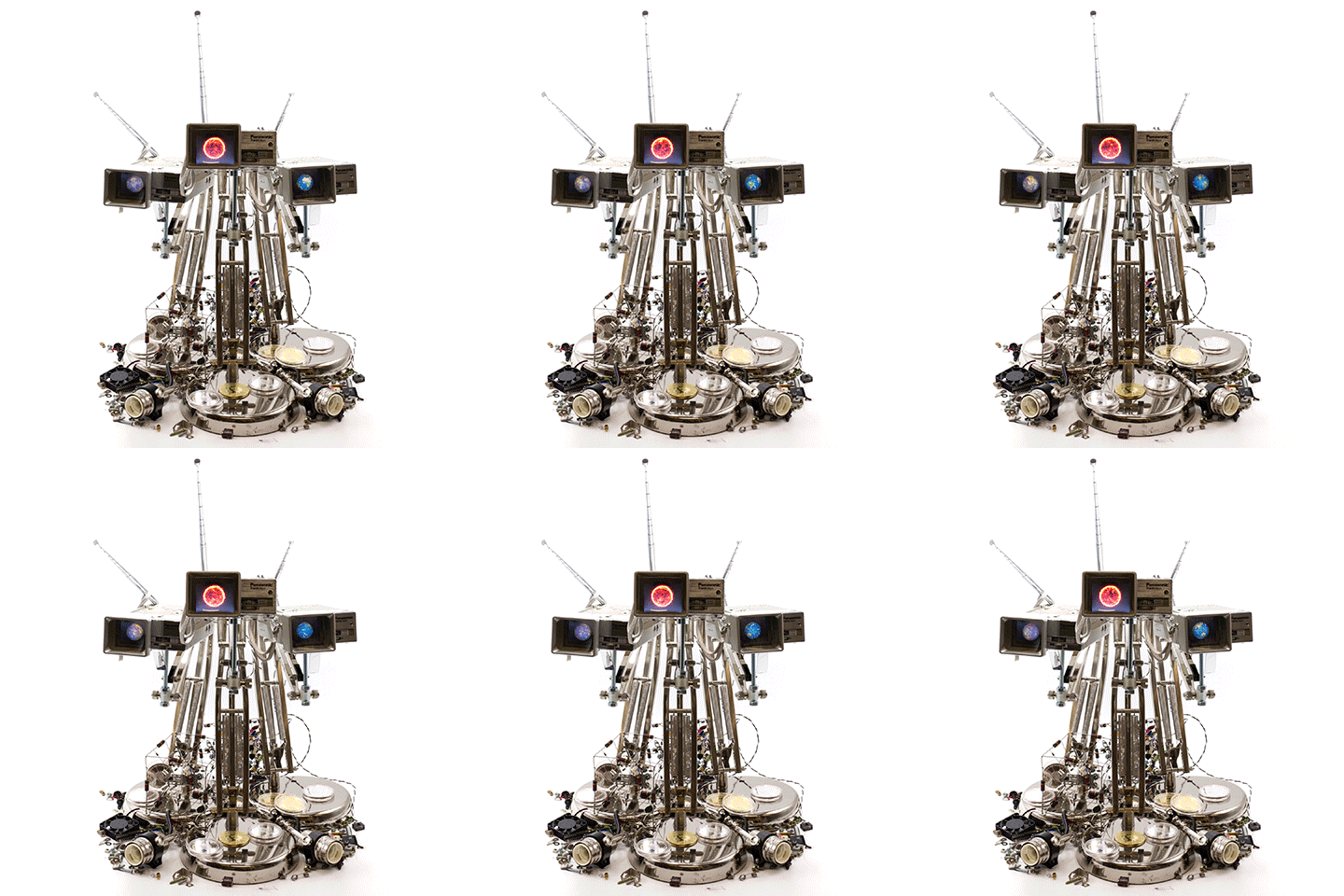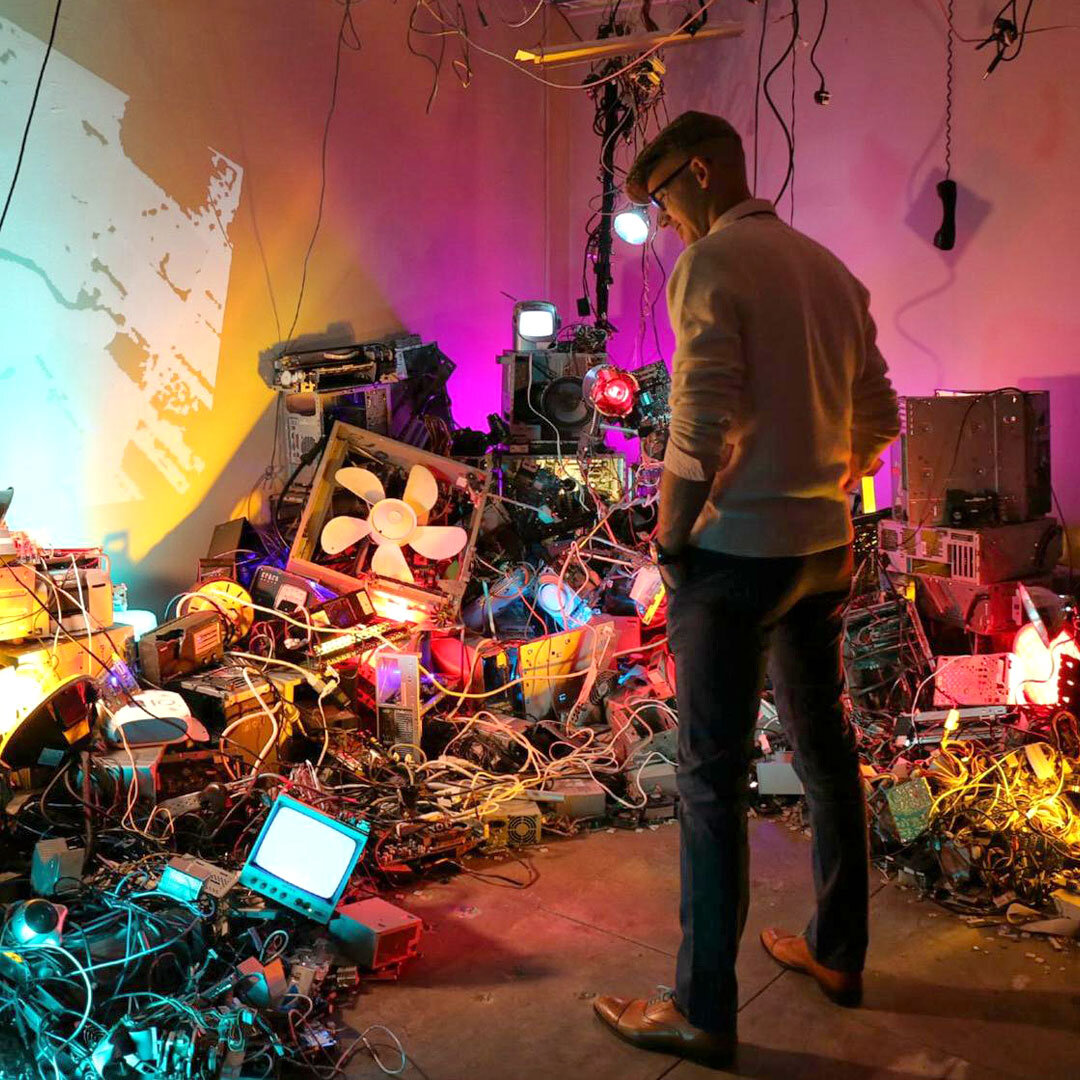
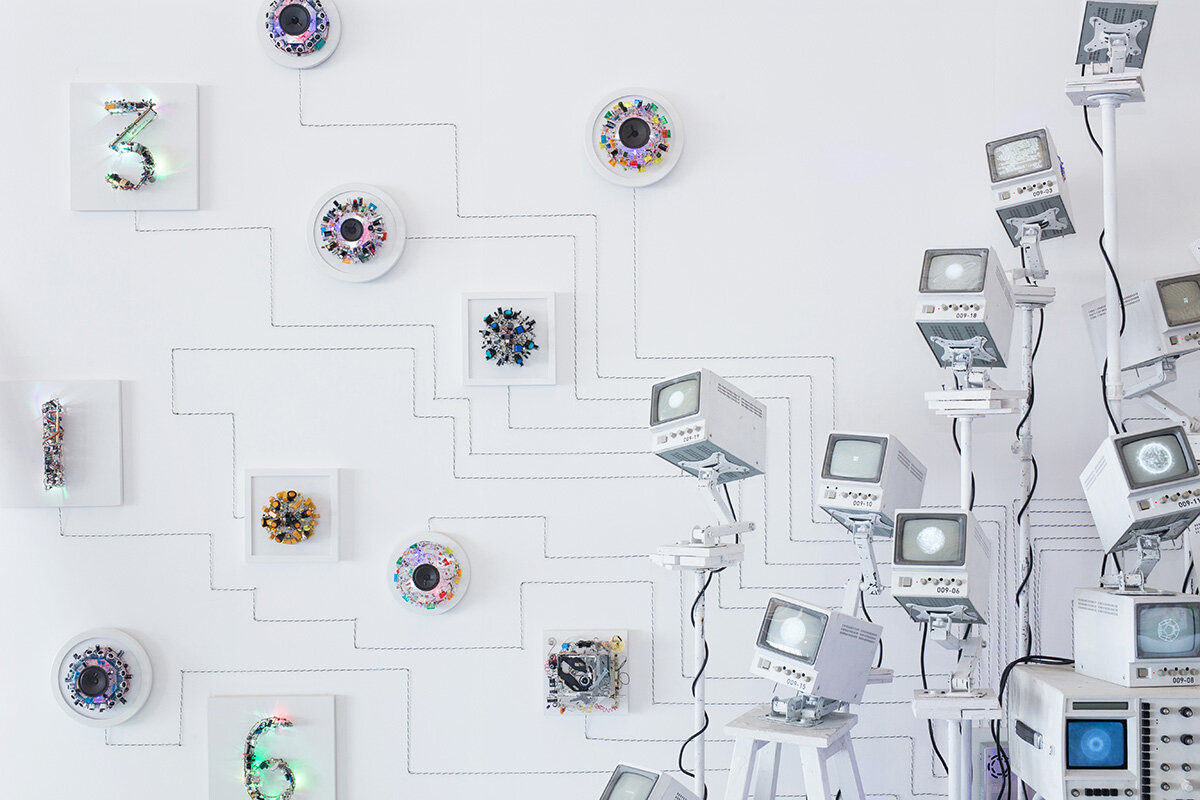
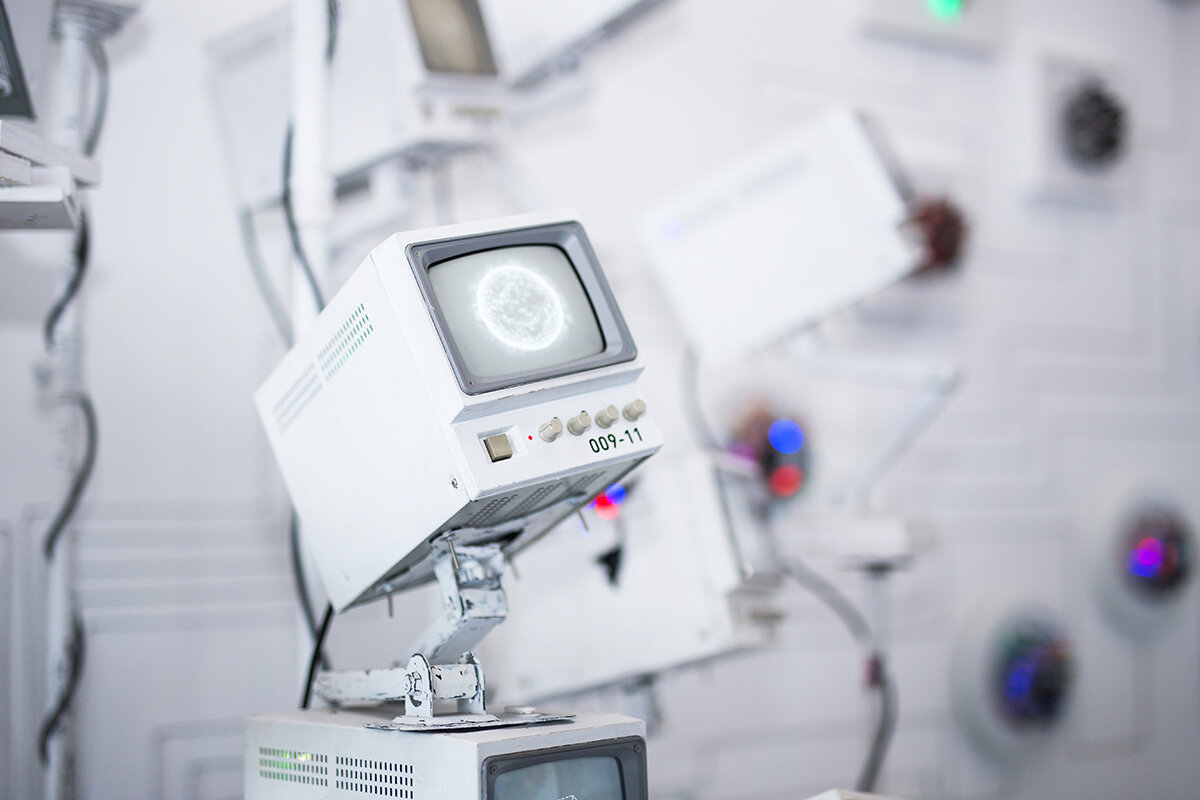
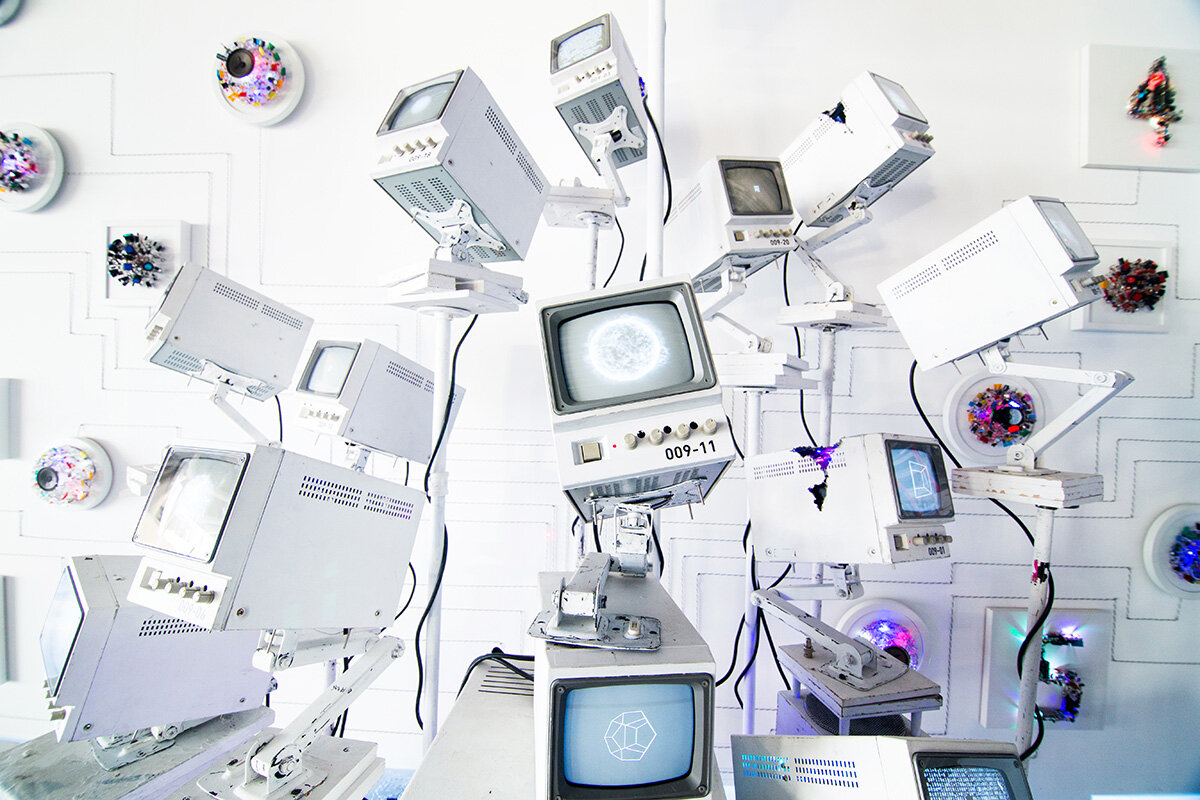


2020-12-31 (Rebirth - I) at 3 World Trade Center
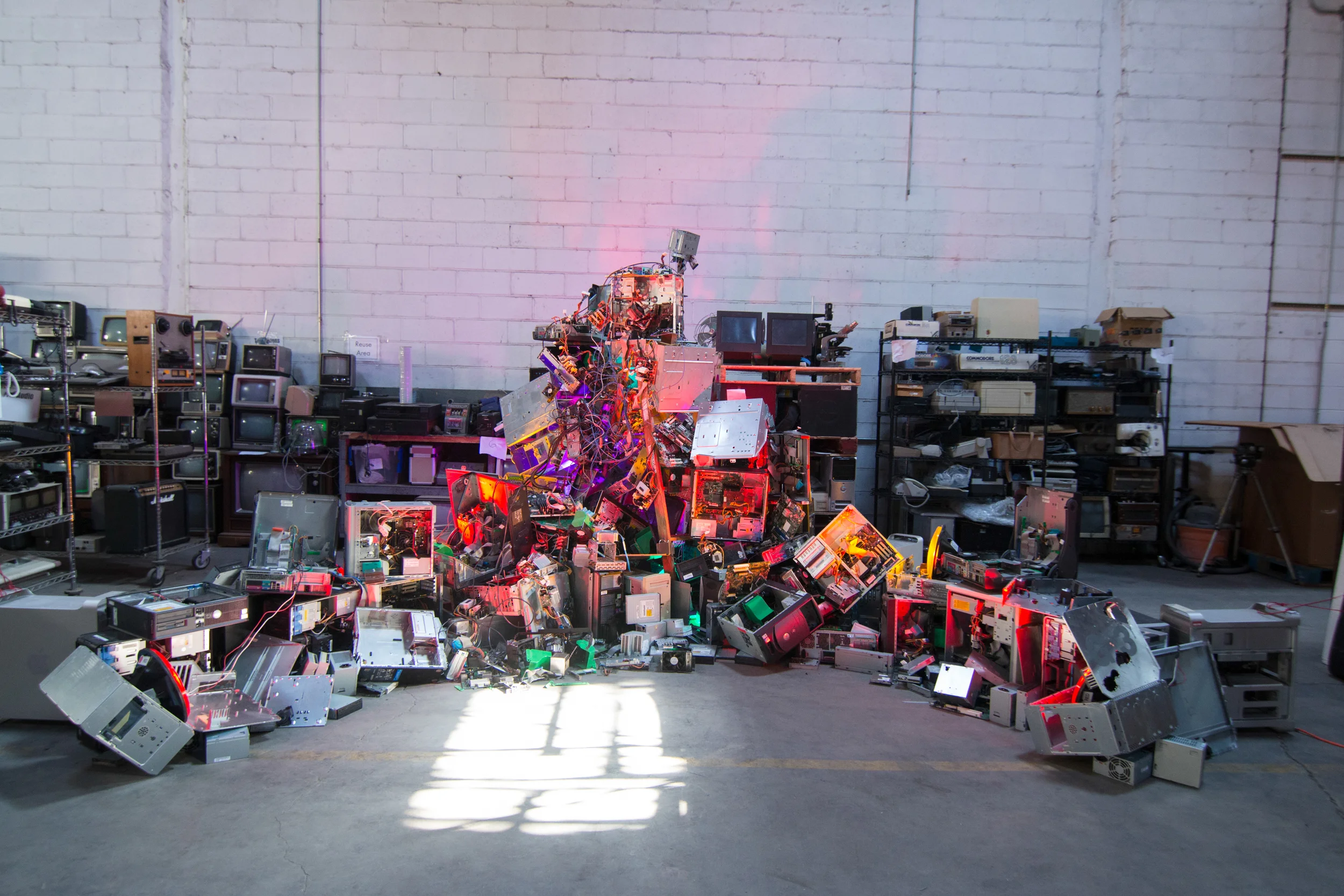
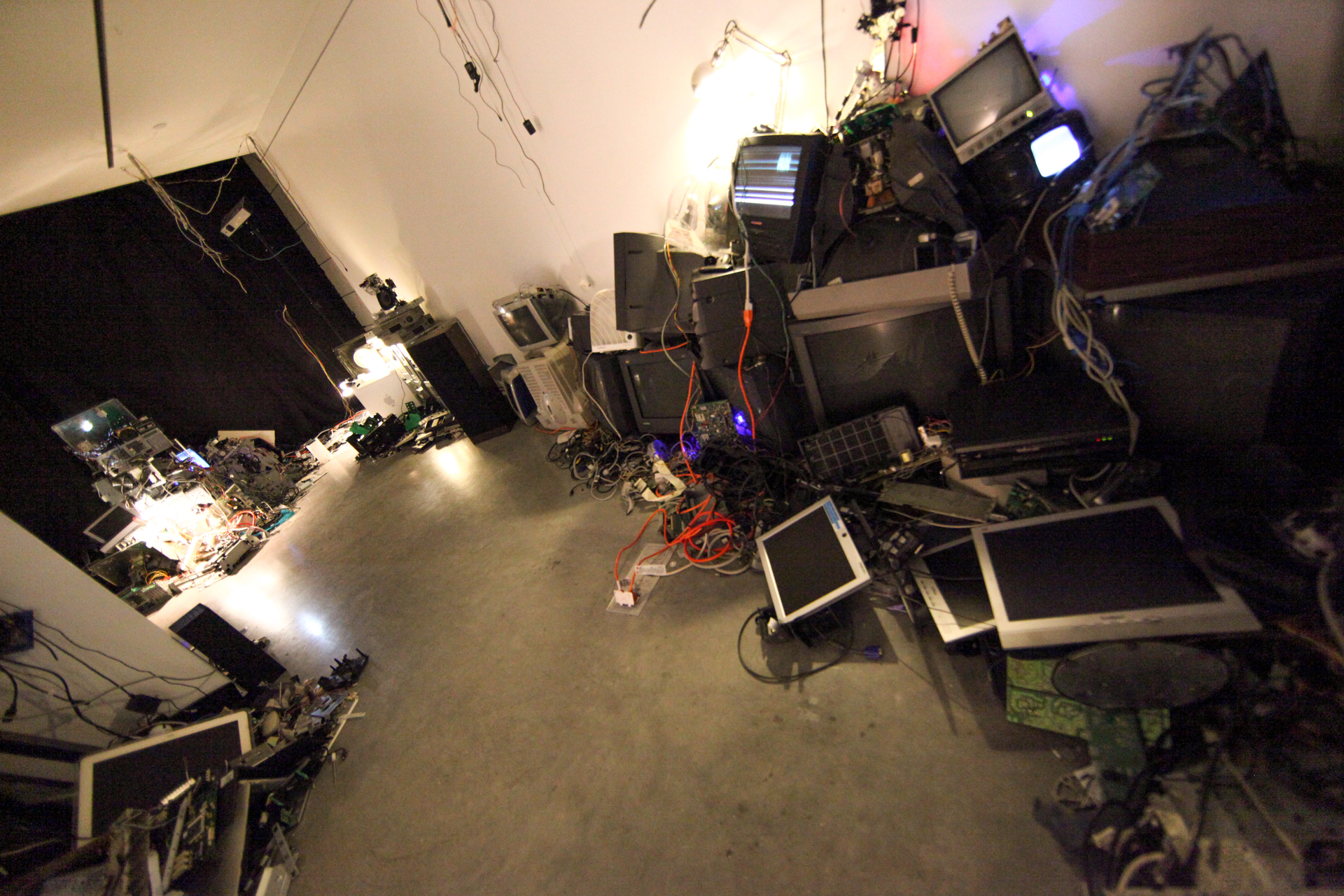
In 2008, I arrived in New York just before the transition to digital broadcasting and began observing abandoned analog technologies in the streets, especially CRT televisions. These encounters were not understood as simple recycling opportunities, but became a lens through which to examine how technology evolves, disappears, and retains latent potential beyond its functional life.
In this process, I began to understand these objects not as tools, but as things in a state of breakdown—where their usability collapses and they become perceptible as presences in themselves. This condition resonates with Martin Heidegger’s notion of the breakdown of the ready-to-hand, marking a shift in perception that became foundational to Digital Being.
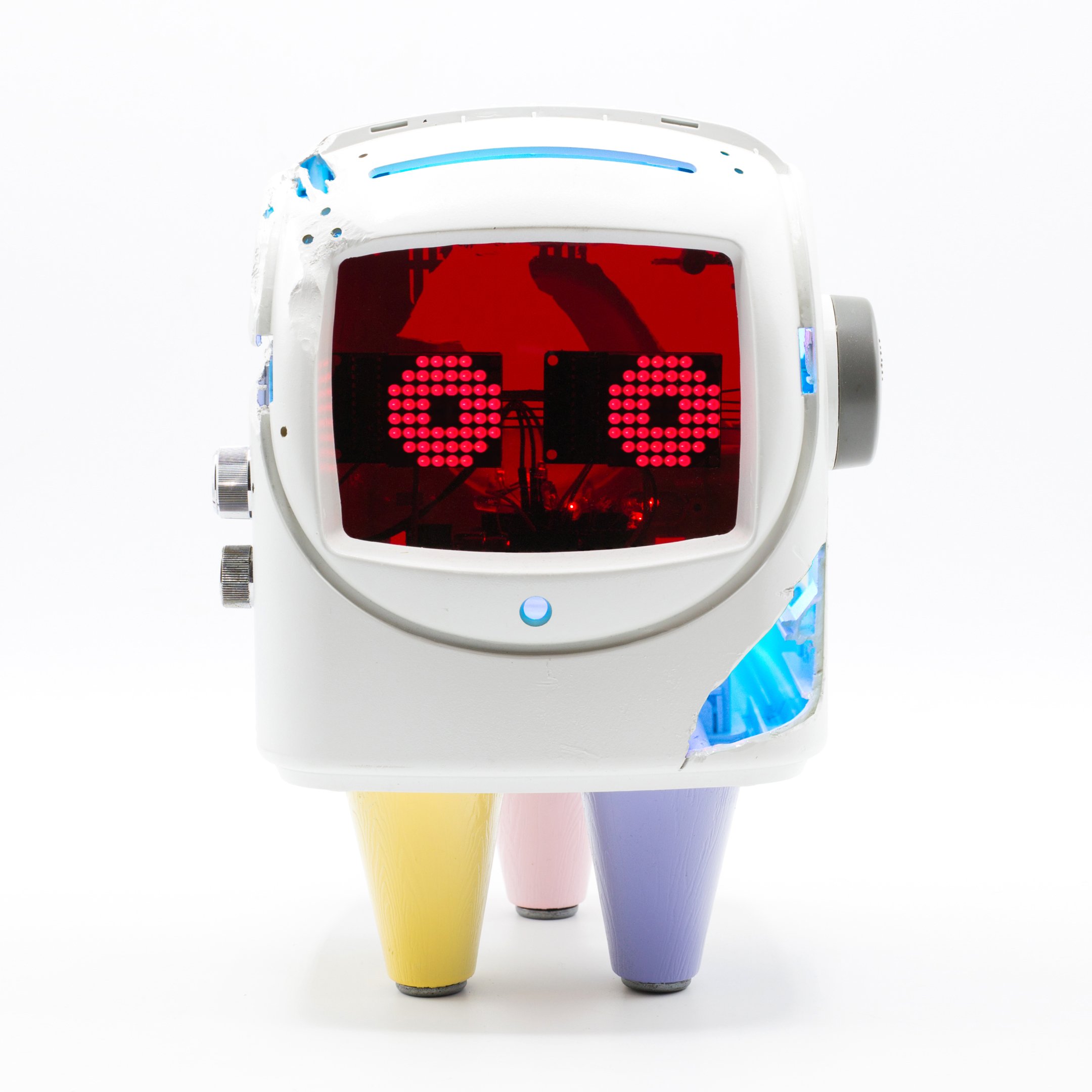
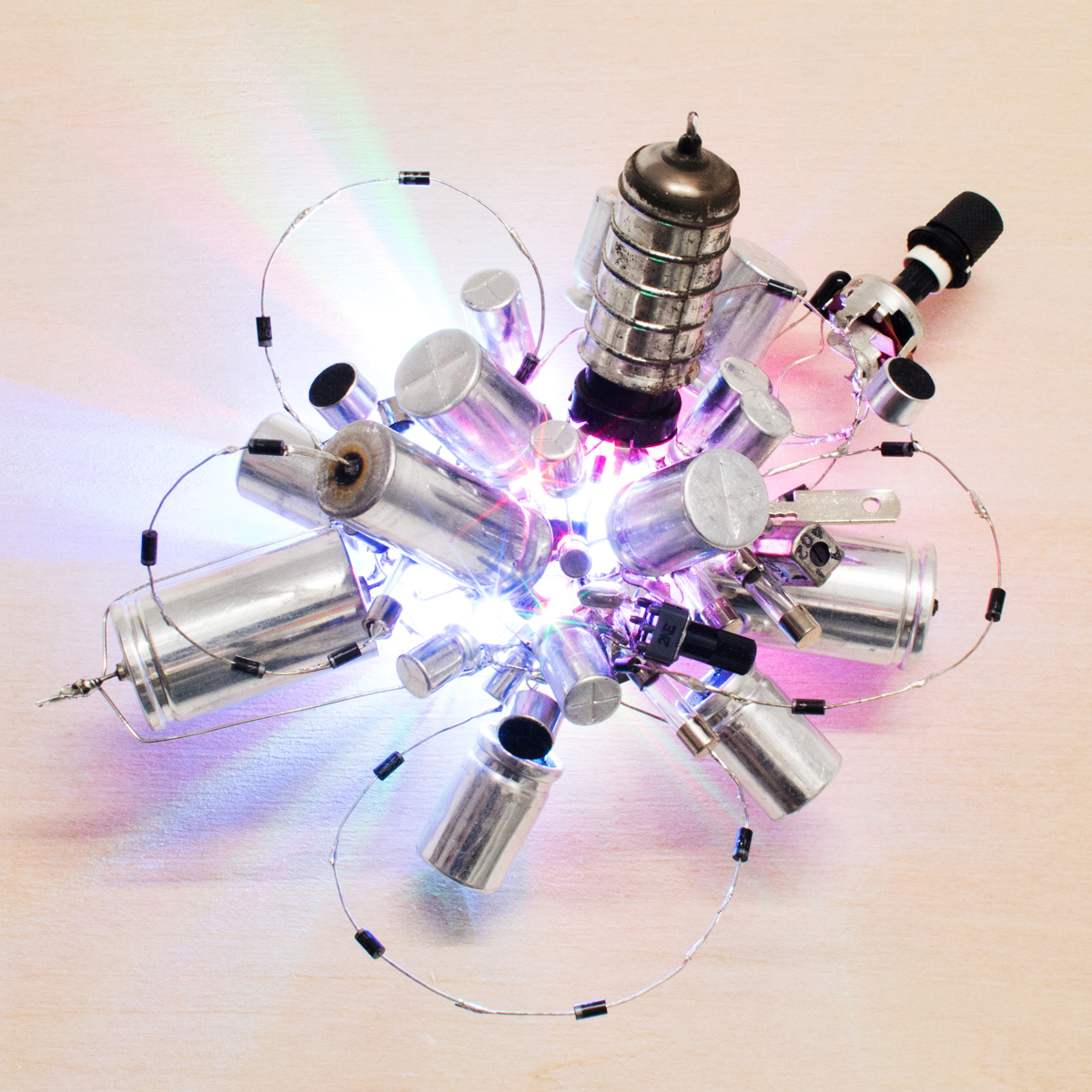
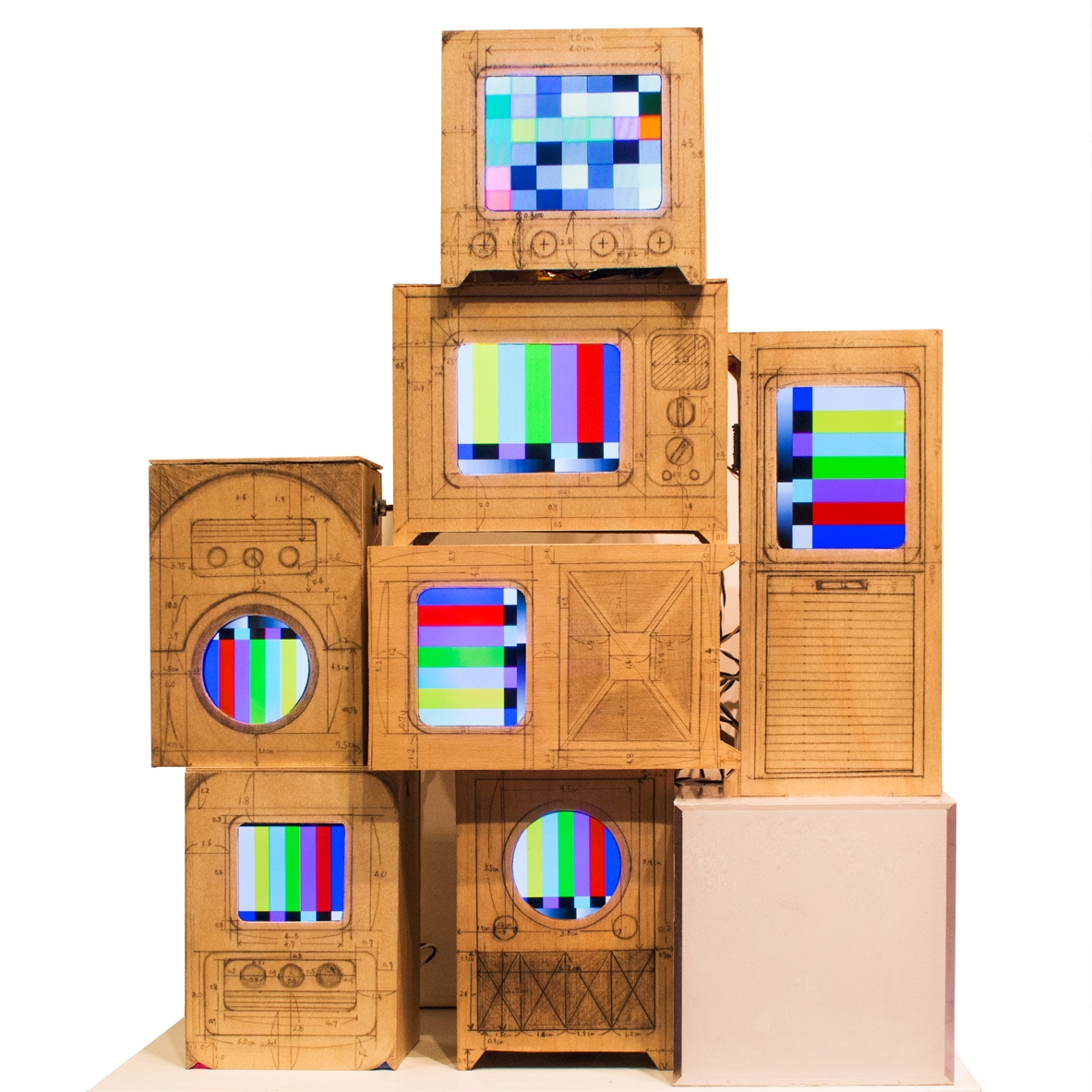
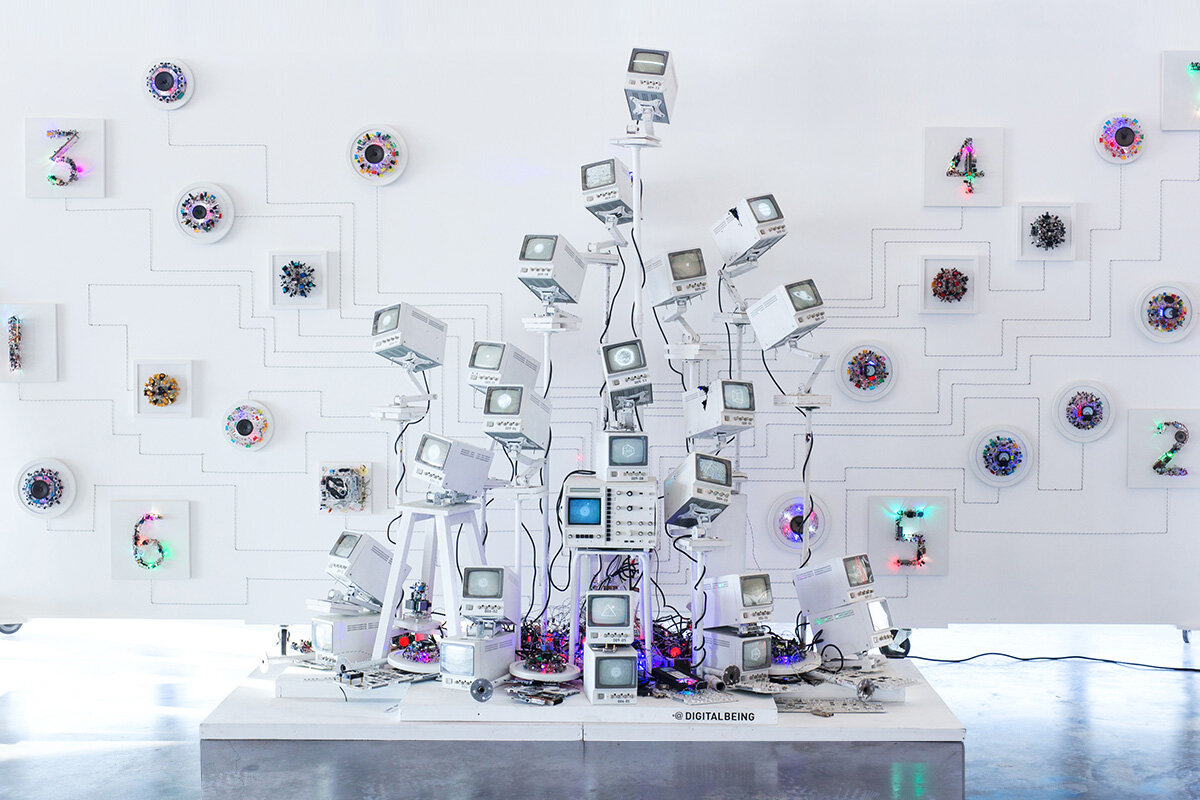
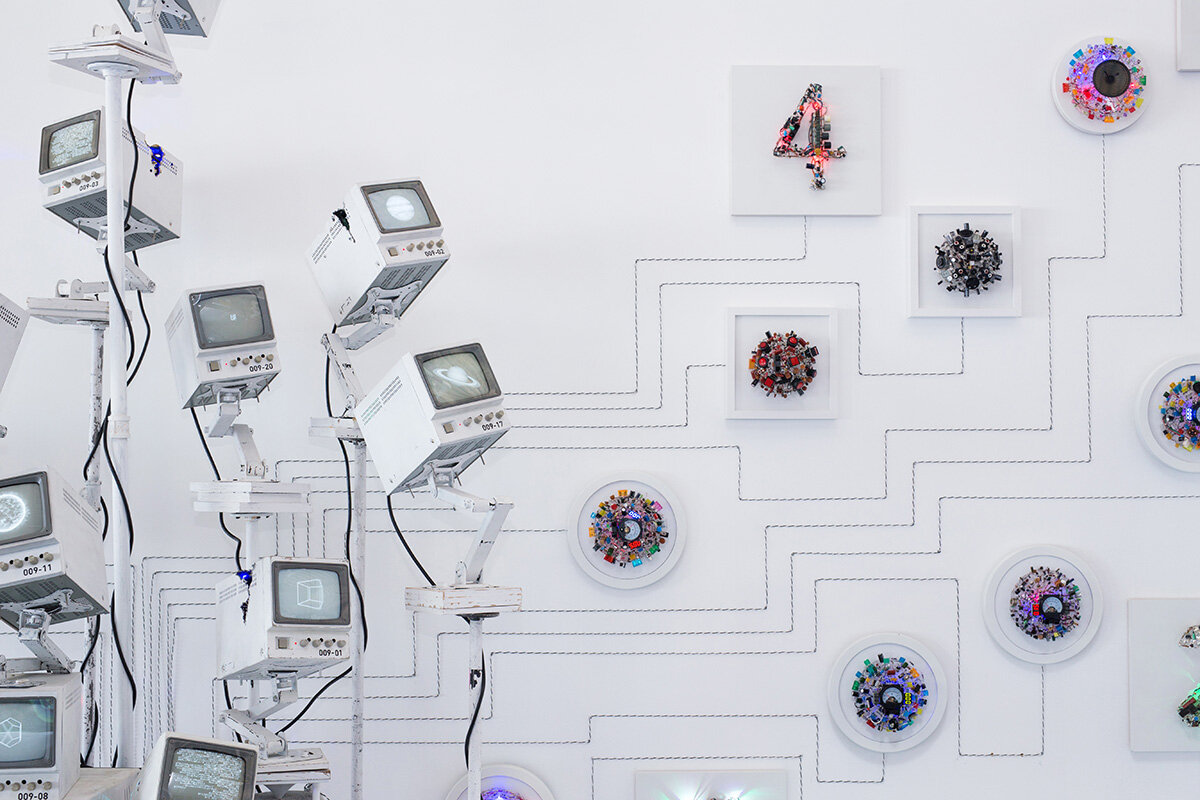
My series, Digital Being, emerges from these observations. It consists of unstable, formless systems generated through technological transformation. Some respond interactively to viewers and environments, while others operate according to the material and technical conditions of each machine. Guided by Gilles Deleuze’s concept of becoming, these systems exist in continuous transformation through relations between humans, space, and data.
The works take multiple forms. They may unfold as immersive environments that surround the viewer (e.g., Digital Being: Radio Row), or condense into sculptural configurations that concentrate the same systemic logic (e.g., Digital Being: Candle TV in the Digital Era).
Across these variations, each work operates through an Unmaking process, in which dismantling and recomposition occur as a single condition of transformation. Rather than preserving function, the system reconfigures obsolete technologies into fields of relation and signal, allowing machine-specific modes of emergence to appear.
My practice situates Digital Being within the framework of contemporary media theory, connecting it through the thought of Walter Benjamin, Michel Foucault, Jacques Derrida, and Jean Baudrillard: the transformation of technological perception, the structuring of knowledge and power, the instability of meaning, and the logic of simulation. Within this framework, Digital Being is not a representation of machines, but a processual system in which meaning is not pre-given. It emerges through interaction, instability, and continuous reconfiguration between human, machine, and environment.